Home / Blog / Water Damage Restoration Cost in Missouri: 2026 Price Guide
Water Damage Missouri BlogWater Damage Restoration Cost in Missouri: 2026 Price Guide
Nobody budgets for water damage. One day your basement is dry storage, the next it is an indoor wading pool, and suddenly you are staring at a repair bill that could be anywhere from a few hundred dollars to tens of thousands. That huge range is exactly why cost guides matter. This guide breaks down what water damage restoration typically costs in 2026, what drives the price up or down, how insurance fits in, and how to avoid overpaying. Every price below is a published national or industry average, not a quote from any single company, and we will say plainly where each number comes from.
The Short Answer: What Water Damage Restoration Costs in 2026
According to Angi's 2026 cost data, water damage restoration averages about $3,800 nationally, with typical projects landing anywhere from roughly $1,000 to $5,000 depending on the extent of the damage. Angi's city-level pages tell a consistent story: Charlotte averages $2,328 (range $1,014 to $4,081), Portland averages $3,663 (range $1,529 to $5,867), and Los Angeles averages $3,728 (range $1,567 to $5,960). Per-square-foot pricing generally runs between about $1.80 and $5.60 per square foot, though contaminated water can push it higher.
| Cost benchmark | Published average | Typical range |
|---|---|---|
| National average project | $3,800 | $1,000 to $5,000+ |
| Cost per square foot | $3 to $4 | $1.80 to $7.50 |
| Average insurance claim (severe damage) | $13,954 | Varies by policy |
| Mold removal add-on | Varies by market | $726 to $3,600 |
That last row deserves attention. RubyHome's 2026 water damage statistics, which draw on HomeAdvisor data, put the average insurance claim for serious (Class 3 and 4) water damage at $13,954, noticeably higher than the average restoration cost across all damage classes. The lesson is simple: small problems caught early cost a fraction of big problems discovered late. If you are reading this with a wet floor right now, speed is money.
What "Restoration" Actually Includes
Confusion about what you are paying for is one of the biggest reasons water damage bills feel shocking. A full restoration job has two distinct phases, and many estimates cover both:
- Mitigation (the emergency phase): stopping the damage. This means water extraction, moisture mapping, industrial drying equipment, removal of unsalvageable materials like soaked drywall and carpet pad, and sanitizing. If you want the full breakdown of this phase, our guide on water mitigation vs restoration walks through it step by step.
- Restoration (the rebuild phase): putting the space back. New drywall, flooring, paint, trim, and fixtures, so the room looks the way it did before the water arrived.
Some companies itemize these phases separately; others bundle them into one estimate. Either way, knowing the two phases exist helps you read any quote with a sharper eye. A quote that only covers extraction and drying is not a finished job if your drywall still needs replacing.
The Biggest Cost Driver: Water Category
The restoration industry classifies water into three categories, and the category is the single biggest predictor of what you will pay:
- Category 1 (clean water): from a sanitary source such as a broken supply pipe, a leaking faucet, or a water heater line. Cheapest to handle.
- Category 2 (gray water): water with some contamination, such as dishwasher or washing machine overflow. Requires more cleaning and protective measures.
- Category 3 (black water): grossly contaminated water containing sewage, chemicals, or bacteria. All floodwater counts as Category 3.
Published per-square-foot averages by category, sourced from HomeAdvisor data via RubyHome, look like this:
| Water category | Average cost per sq ft | Why it costs more |
|---|---|---|
| Category 1 (clean) | $3 to $4 | Straightforward extraction and drying |
| Category 2 (gray) | $4 to $6.50 | Extra cleaning, some material removal |
| Category 3 (black) | $7 to $7.50 | Full sanitizing, porous materials removed |
Angi's city data confirms the pattern: repairing black water damage can cost more than double what clean water damage costs. That is because porous materials soaked by contaminated water, such as drywall, insulation, and carpet, generally cannot be saved. They get removed and replaced, which adds both labor and materials to the bill.
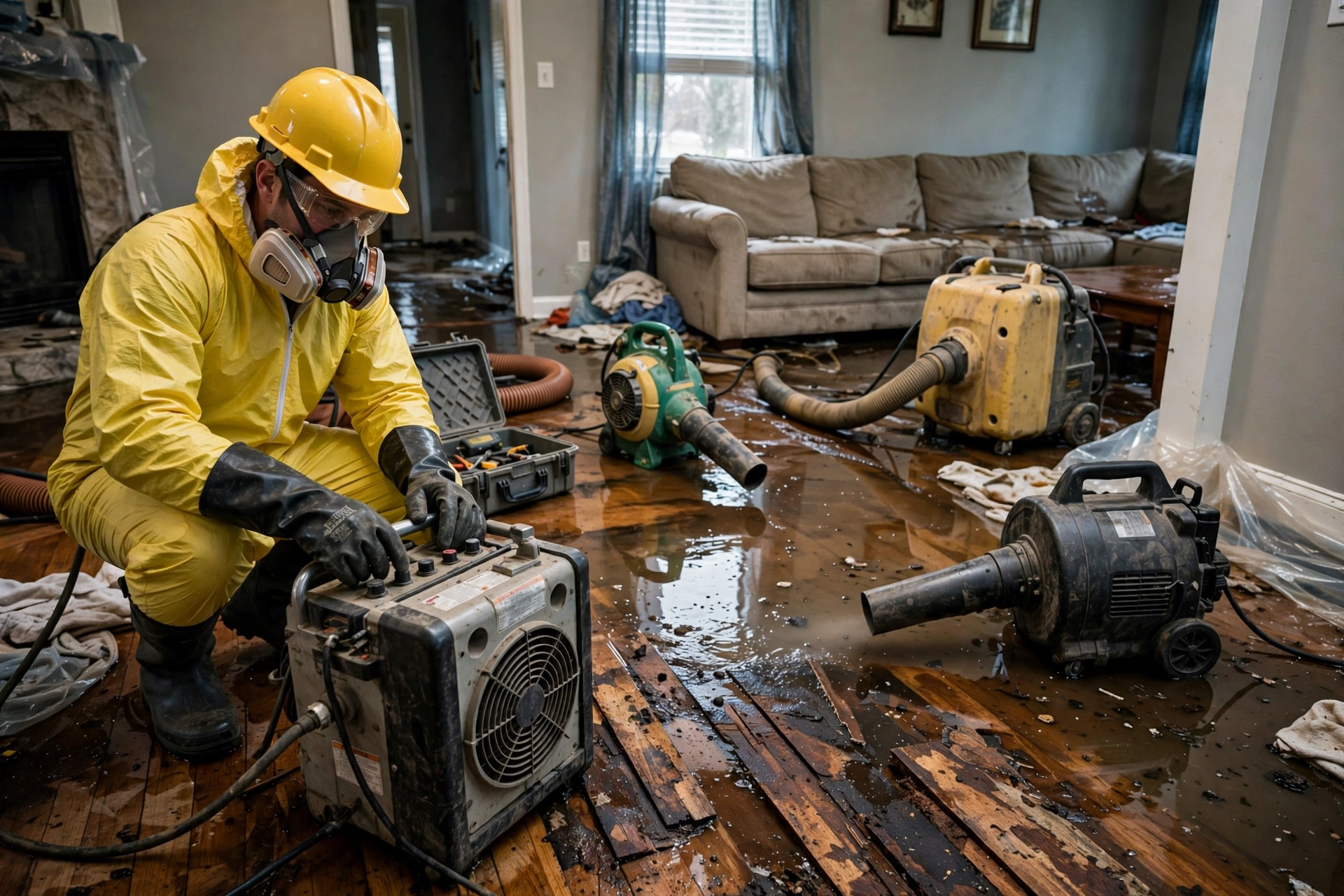
Real talk: all floodwater is Category 3, no exceptions. If storm water came in under your door, budget for the black water column, not the clean one.
How Much Area Is Affected
Beyond the water category, the industry also grades damage by "class," which describes how much of the room's materials absorbed water. A small puddle on tile that never touched the walls (Class 1) is a fundamentally different job from water that wicked two feet up the drywall and saturated the subfloor (Class 4). More saturated porous material means more demolition, more drying time, and more reconstruction.
This is why two neighbors with "a flooded basement" can get wildly different quotes. One had an inch of clean water on a sealed concrete floor; the other had six inches of storm water in a finished basement with carpet, drywall, and furniture. Same street, completely different jobs. When you are comparing your situation to published averages, the honest question is not "how much water" but "how much did the water touch."
Where the Damage Is: Cost by Repair Type
Location matters because different parts of a house involve different materials, labor, and access challenges. Angi publishes estimated restoration costs by repair type, and they are worth studying before you talk to any contractor:
| Repair type | Estimated average cost |
|---|---|
| Roof repair | $242 to $1,900 |
| Ceiling repair | $272 to $1,500 |
| Basement | $302 to $2,700 |
| Drywall | $181 to $808 |
| Flooring | $121 to $2,900 |
| Leaky pipe | $91 to $333 |
| Toilet | $85 to $380 |
| Bathtub and shower | $121 to $760 |
| Plumbing | $212 to $3,800 |
| Mold removal | $726 to $3,600 |
Notice the basement row. Basements are the most common water damage location in Missouri homes, and the range is enormous because a basement can be anything from bare concrete to a fully finished living space. Our flooded basement cleanup page covers what that job involves, and the ceiling water damage repair page covers overhead leaks, which follow a different cost logic since gravity spreads the damage outward from the entry point.
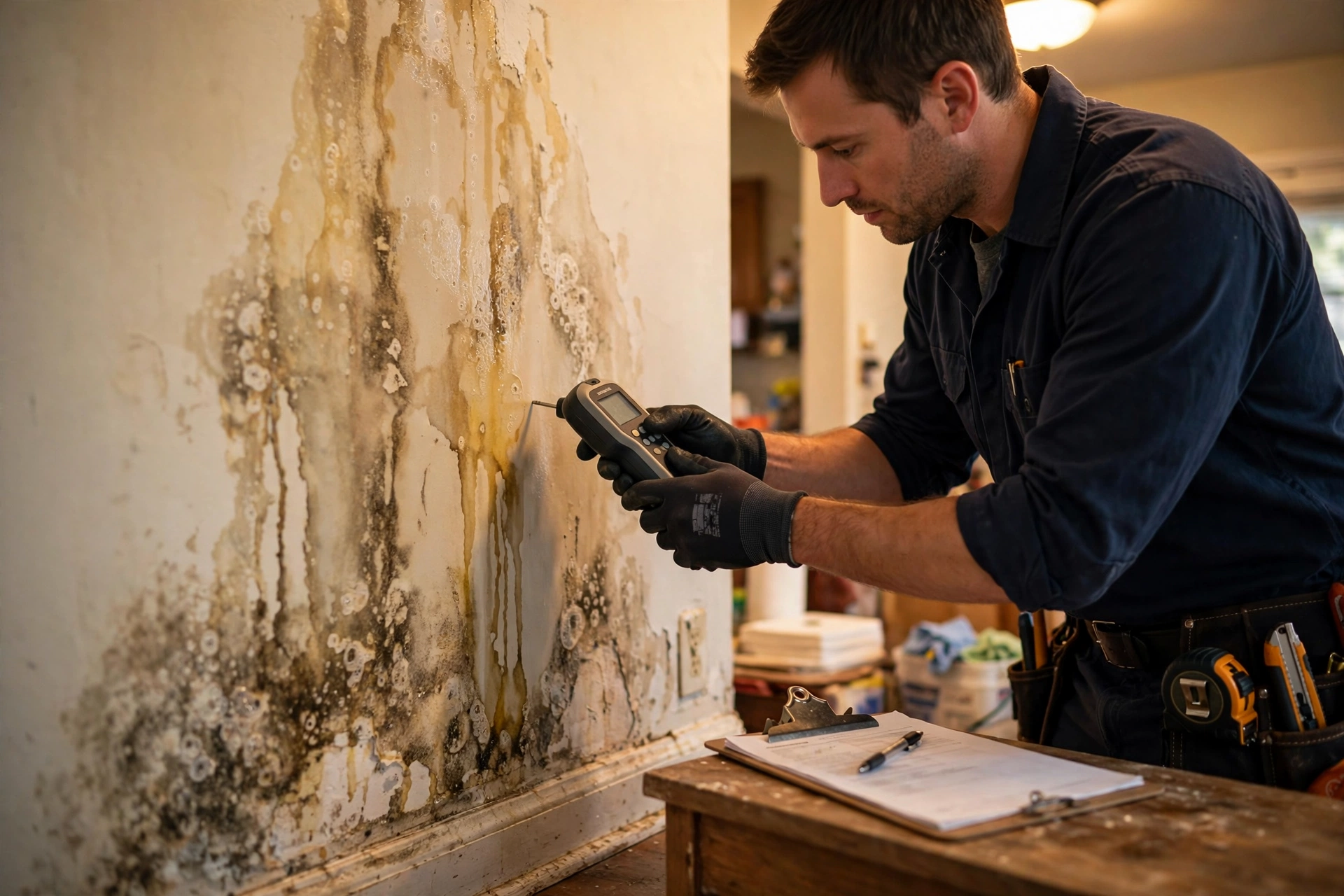
Materials Make a Difference
Two rooms with identical water exposure can cost very different amounts to restore because of what they are made of:
- Carpet and pad: carpet pad almost never survives soaking; the carpet itself sometimes can be saved with clean water but is usually removed with gray or black water. See our carpet water damage restoration service page for details.
- Hardwood floors: can sometimes be dried in place with specialty mats if caught early, but cupped or buckled boards need replacement, which is among the priciest flooring repairs. More on our hardwood floor water damage repair page.
- Drywall: wicks water upward and loses structural integrity when saturated; the standard practice is cutting out damaged sections a foot or more above the visible water line.
- Tile and concrete: the most forgiving surfaces; often the drying cost is the whole story.
If your home has expensive finishes, that is worth mentioning when you request an estimate, because material replacement is priced per the actual materials going back in, not per some generic allowance.
What Drives the Price Up
Knowing the surcharge factors helps you understand a quote instead of just reacting to the total:
- Delay: every day of standing water increases demolition and mold risk. Mold remediation alone averages $726 to $3,600 as an add-on, per Angi.
- Contamination: Category 2 and 3 water roughly doubles the per-square-foot cost versus clean water.
- Access difficulty: crawl spaces, finished basements with built-ins, and multi-story leaks cost more in labor.
- Emergency timing: middle-of-the-night emergency response can carry premium rates, though waiting until morning with active water intrusion usually costs more in damage than it saves in fees.
- Permits and code upgrades: significant reconstruction may require permits, and older homes sometimes need electrical or plumbing brought to current code during the rebuild.
- Contents handling: moving, cleaning, and storing furniture and belongings is real labor that shows up as a line item.
Insurance: What It Covers and What It Doesn't
For most homeowners, insurance is the difference between an annoying expense and a financial crisis. The coverage rules are widely misunderstood, so here is the plain version:
- Sudden and accidental water damage is typically covered. A burst pipe, a washing machine hose that lets go, a water heater failure, these are the classic covered claims under a standard HO-3 homeowners policy.
- Gradual damage is typically excluded. A slow leak you did not fix for months is considered a maintenance issue, not an insurable event. Insurers draw a hard line between "sudden" and "seeping."
- Flood is excluded from standard policies. Rising water from outside, storm surge, overflowing rivers, needs separate flood insurance, usually through the National Flood Insurance Program. A federal guide for insurance agents notes NFIP policies provide up to $250,000 in structure coverage and up to $100,000 for contents.
- Sewer backup and sump pump failure often need an endorsement. Standard policies commonly exclude these unless you purchased a water backup endorsement, which is usually inexpensive relative to the risk, especially for Missouri basements.
- The failed part itself usually is not covered. Insurance typically pays for the damage the water caused, not for replacing the worn-out pipe or appliance that caused it.
Water Damage Missouri offers direct insurance billing, which means the restoration company can work directly with your carrier on documentation and payment rather than leaving you to mediate. If you are navigating a claim, our insurance claim water damage restoration page explains how that process works.
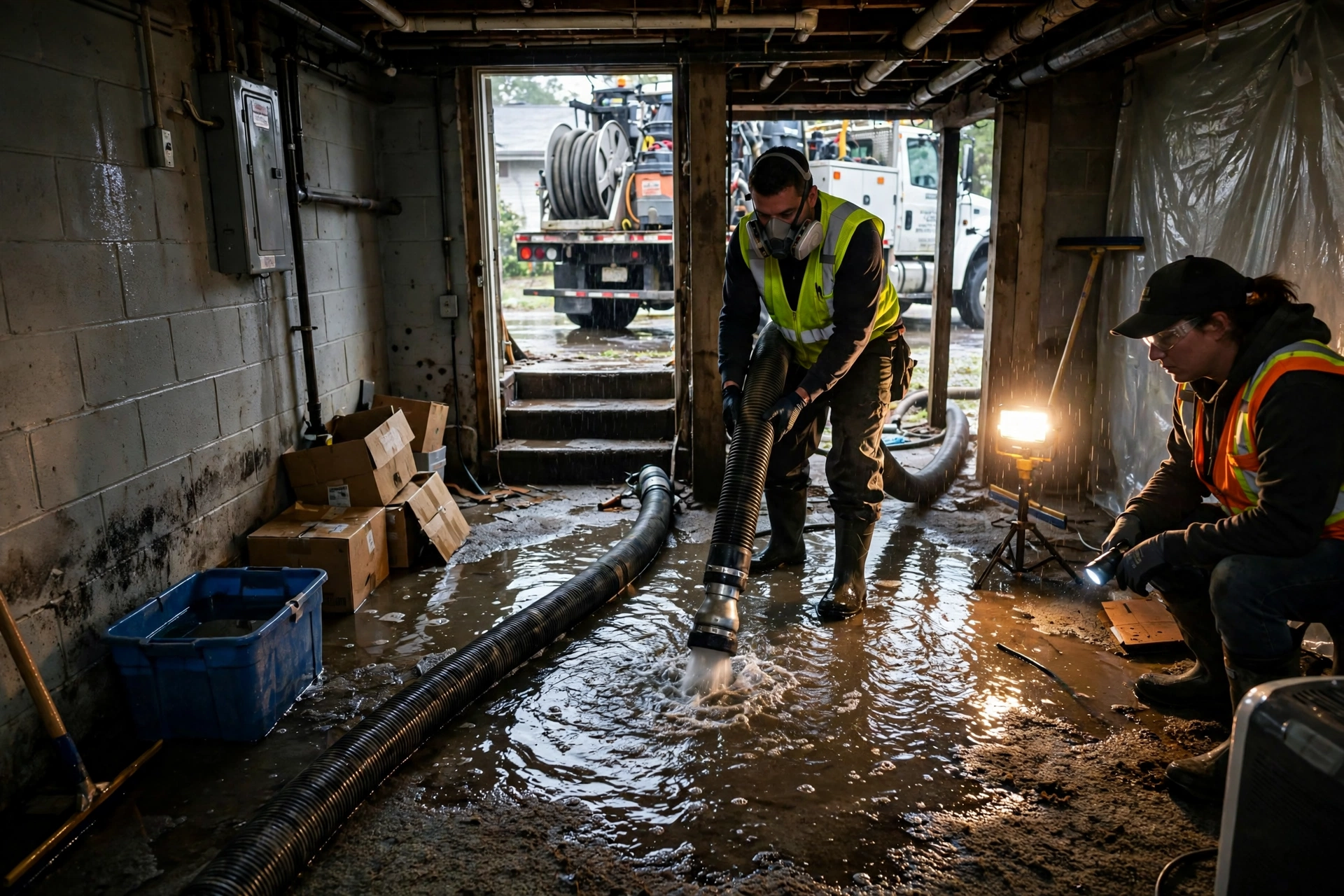
Real talk: call your insurer promptly, but do not wait for an adjuster visit before starting emergency drying. Policies generally require you to prevent further damage, and waiting days for an inspection can jeopardize both your home and your claim.
How to Avoid Overpaying
Restoration is an industry where panicked customers sometimes sign the first estimate put in front of them. A calmer approach:
- Get the scope in writing, itemized. Extraction, drying days, demolition square footage, reconstruction materials, each should be a line item, not a single lump sum.
- Understand mitigation vs restoration pricing. Mitigation costs are driven by equipment, labor hours, and materials removed; restoration costs depend on reconstruction scope that cannot be fully known until drying is complete. Anyone giving you one firm price for both phases before drying is done is guessing.
- For large jobs, get a second estimate. On a $10,000+ project, a second opinion is worth an hour of your time.
- Do not pay the full amount upfront. Standard practice is a deposit with the balance on completion, or direct billing through insurance.
- Check reviews and references. Look for established local companies with verifiable reviews, not just the first sponsored result.
- Document everything yourself. Photos, moisture readings if you can get them, and a log of every conversation. Good documentation protects you in any billing or claim dispute.
When DIY Is Fine and When It Isn't
A small clean-water spill, say a few gallons from an overflowing sink on tile, is a mop, towels, and fans job. You do not need a restoration crew for that. The line moves quickly, though. Call professionals when any of these are true: the water sat more than a day or two, drywall or insulation got wet, the water is gray or black, you smell mustiness, or the affected area is larger than a small room. A professional water damage assessment with moisture meters can find water hiding inside walls that looks dry from the outside, which is exactly the water that becomes a mold problem six weeks later.
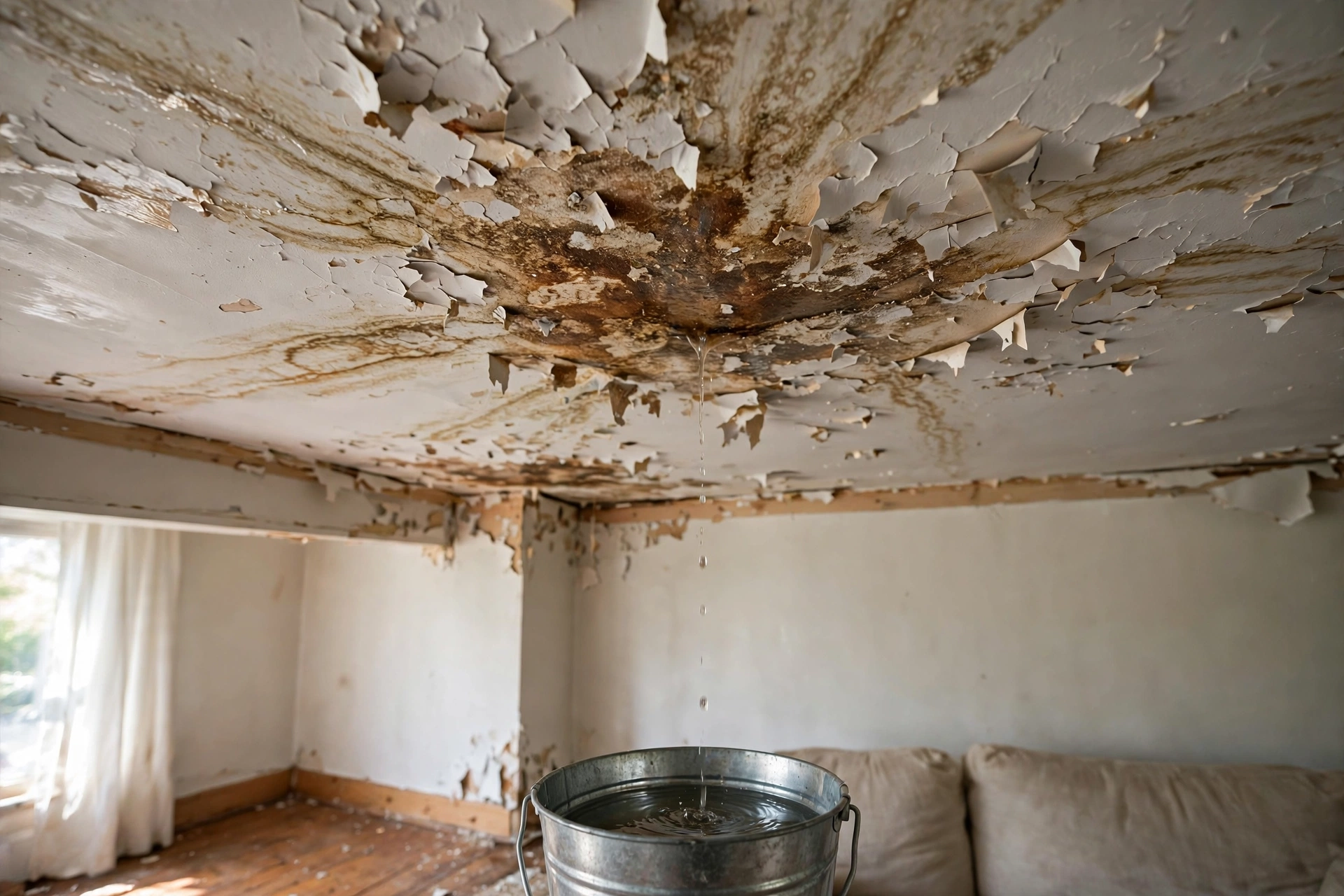
Reading a Restoration Estimate Line by Line
A professional water damage estimate should read like an itemized receipt, not a single mystery number. Here is what the line items usually mean, so you can spot what is missing or inflated:
- Emergency response / mobilization: the cost of getting a crew and equipment to your property, sometimes higher for after-hours calls.
- Water extraction: priced by the volume of water and the area covered; truck-mounted extractors for large volumes, portable units for smaller jobs.
- Drying equipment rental: air movers and dehumidifiers are typically billed per unit per day, and a serious drying job runs 3 to 5 days of continuous operation with daily moisture monitoring visits.
- Demolition and debris removal: priced per square foot of material removed, plus disposal fees, which climb for contaminated materials that need special handling.
- Antimicrobial treatment: sanitizing of affected framing and surfaces, particularly important for Category 2 and 3 losses.
- Reconstruction: drywall, insulation, flooring, trim, and paint, each priced per the actual materials and square footage going back in.
- Contents handling: moving, cleaning, and storing your belongings during the work.
Most insurance adjusters and many restoration companies build these estimates in standardized estimating software, which is actually good news for you: it means line items follow industry pricing databases rather than whatever number someone felt like writing down. If an estimate seems high, ask which line items differ from the adjuster's version and why. Legitimate differences, like higher-grade flooring you requested, are easy to explain. Vague ones are a red flag.
Missouri-Specific Cost Factors
Missouri homes have a few traits that shape restoration costs in ways national averages do not fully capture. First, basements are extremely common across the Kansas City metro, and finished basements are among the most expensive rooms to restore because they combine the lowest point in the house (where water collects) with finished materials (which water ruins). An unfinished storage basement might need extraction and drying only; a finished basement with carpet, drywall, and a bathroom can easily reach five figures.
Second, Missouri's storm season brings flash flooding, and floodwater is Category 3 by definition, which puts storm-driven losses in the most expensive per-square-foot bracket from the start. Homes in low-lying areas or near creeks face this risk repeatedly, which is worth factoring into decisions about sump pumps, backup power, and that water backup endorsement on your insurance we mentioned earlier.
Third, the region's clay-heavy soils expand and contract with moisture, which contributes to foundation seepage issues in older homes. Seepage-driven damage is a coverage gray area, gradual seepage is commonly excluded from standard policies, so knowing whether your water came from a sudden event or a slow seep matters enormously for both your wallet and your claim. When in doubt, a professional water damage assessment documents the source and extent while the evidence is fresh.
Frequently Asked Questions
Published national averages run about $3 to $4 per square foot for clean (Category 1) water, $4 to $6.50 for gray (Category 2) water, and $7 to $7.50 for black (Category 3) water, based on HomeAdvisor data. Angi's 2026 city-level data shows overall per-square-foot costs ranging roughly from $1.80 to $5.60 depending on the market and damage type.
Angi's 2026 data puts the national average around $3,800, with typical projects ranging from about $1,000 to $5,000. Severe cases involving extensive contamination or structural damage can run much higher; the average insurance claim for the most serious damage classes is about $13,954 according to 2026 industry statistics.
Sudden and accidental water damage, like a burst pipe or appliance failure, is typically covered under a standard HO-3 policy. Gradual leaks from poor maintenance are usually excluded, and flood damage from rising exterior water requires separate flood insurance. Sewer backup and sump pump failure often need a specific endorsement.
Black water (Category 3) is grossly contaminated, so porous materials like drywall, insulation, carpet, and pad cannot be saved and must be removed and replaced. The job also requires full sanitizing, protective equipment, and stricter disposal procedures. All floodwater is classified as Category 3.
Mitigation (extraction and drying) typically takes 3 to 5 days of active drying, while full restoration including reconstruction can take 1 to 3 weeks or more depending on scope. Restoration cannot begin until moisture readings confirm the structure is dry, so the phases run in sequence, not in parallel.
Often yes, if the damage is contained to one area and the water was clean. With Category 3 contamination, extensive demolition, or no working plumbing or HVAC, temporary relocation is usually recommended. Your restoration company and insurer can advise based on the specific situation.
Related Guides
References
- Angi. (2026). How much does water damage restoration cost in Charlotte, NC? https://www.angi.com/articles/how-much-does-it-cost-repair-water-damage/nc/charlotte
- Angi. (2026). Water damage vs. termites: How to spot the difference. https://www.angi.com/articles/water-damage-vs-termites.htm
- RubyHome. (2026). Water damage statistics (2026). https://www.rubyhome.com/blog/water-damage-stats/
- HomeClaimGuide. (n.d.). Does homeowners insurance cover water damage? The sudden vs gradual rule explained. https://homeclaimguide.com/does-homeowners-insurance-cover-water-damage/
- Independent Insurance Agents & Brokers of New York. (2025). A guide to homeowners vs. flood policies. https://www.biginy.org/wp-content/uploads/sites/27/2025/07/Homeowners_Vs_Flood.pdf
Water damage can't wait.
Available 24/7 across the Kansas City metro and Missouri. Call (773) 241-7457 now for help day or night.